
Fire and Drought Resources

Neighbourhood Wood Chipping Pilot
One of the greatest accelerators of wildfire is woody debris. The good news is, this is a manageable problem with a fairly simple solution that’s already in practice in many regional communities: chipping. Chipping the debris reduces fire fuel, creates valuable chips for gardens and farms and provides an alternative to burning, thus reducing air…

Planting Days in the Hwmet’utsun (Maxwell) Creek Watershed!
Attention Nature and Plant Enthusiasts! Help Us Restore Our Local Forests The Climate Adaptation Research Lab is calling on your green thumbs and gardening expertise to assist with an exciting Forest and Wetland Restoration Project! We’re working to restore vital native ecosystems in the Maxwell Creek Watershed, and your support can make all the difference.…
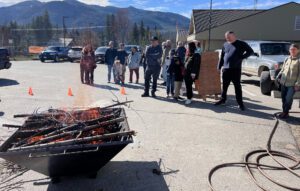
Reducing Wildfire Risks & Biochar: TSS Members Travel to Clearwater, BC, to Talk About Forest Resiliency
On April 5th and 6th, Grace Fields, the TSS Project Coordinator for the Climate Adaptation Research Lab (CARL), and Brian Smallshaw (Biochar Working Group Lead) travelled up to Clearwater, BC, to speak to community members on improving the resiliency of their forests to climate change and wildfire. On Friday evening, organized by Astrid Arumae of…
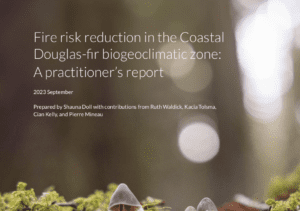
New Report Shows Us How to Reduce Wildfire Risks
Fire risk reduction in the Coastal Douglas-fir biogeoclimatic zone Read the Full Report here. Introducing a new practitioner’s report focused on reducing fire risk by increasing ecological integrity. Historically, wildfire has been an intermittent but essential disturbance regime in forested ecosystems across the country. In more recent times, the arrival of settlers and the dominance…
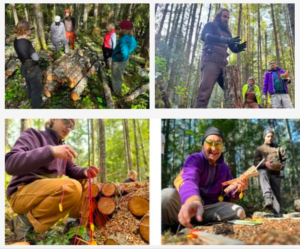
Climate Adaptation Research Lab – Restoring the Maxwell Watershed with North Salt Spring Waterworks District.
Climate Adaptation Research Lab – Restoring the Maxwell Watershed with North Salt Spring Waterworks District Watch this short and brilliant 5-minute video. It describes why we are doing our work in the watershed. GISS students worked with CARL team members on a restoration project in the Hwmet’utsum (Mt. Maxwell) Creek Watershed. While most students were…

Healthy forests can help protect us from disasters
Read the whole article in the May 24th 2023 issue of the Gulf Islands Driftwood. Andria Scanlan won’t ever forget the howling winds and trees that came crashing down around her house that December afternoon in 2018. “We have a long-distance view from Channel Ridge, and I could see and hear the gusts rolling in…

Future-Proof Your Home with Water Management
Save Money and Improve Resilience by Harnessing Your Water Resources This practical and engaging webinar explores how to use water wisely on your property to reduce costs, increase climate resilience, and build a more sustainable future, no matter your starting point. Learn how to make the most of rainwater, manage greywater, reduce overall water usage,…

Why Healthy Forests Matter in Reducing Fire and Drought Risk
In this informative Q&A session, forest ecologist Erik Piikkila explains the critical role healthy forests play in protecting our communities from fire and drought. As climate extremes become more frequent, understanding the link between forest health, water security, and fire resilience is more important than ever—especially for landowners, stewards, and concerned citizens of the Southern…

Fire Risk Reduction in the Coastal Douglas-fir Biogeoclimatic Zone
This comprehensive, full-day workshop brought together over 70 participants, including FireSmart Coordinators, forest managers, BC Wildfire Service, Fire Rescue, First Nations representatives, and local government to address fire risk in the Coastal Douglas-fir (CDF) Biogeoclimatic Zone. With 70% of the CDF zone under private ownership, participants explored how communities can adapt to increasing fire risk…

NATIVE PLANT STEWARDSHIP RESOURCES
Growing native plants is very rewarding and helps provide important habitat for local birds, animals and pollinators. Native Plants: • Are adapted to your climate • Are drought tolerant • Are resistant to diseases and pests • Low maintenance • Add beauty and interest • Promote bio-diversity • Invite and sustain local wildlife • Support…